Cagrilintide: what the research shows
A copy of amylin, a fullness hormone, being developed alongside semaglutide.
Also known as Half of CagriSema

At a glance
20.4%
average weight lost in 68 weeks, combined with semaglutide
REDEFINE 1 trial, 3,417 adults · placebo: 3.0%
Not approved yet. Combined with semaglutide as CagriSema, it has been submitted to the FDA, with a decision expected in late 2026.
What is Cagrilintide?
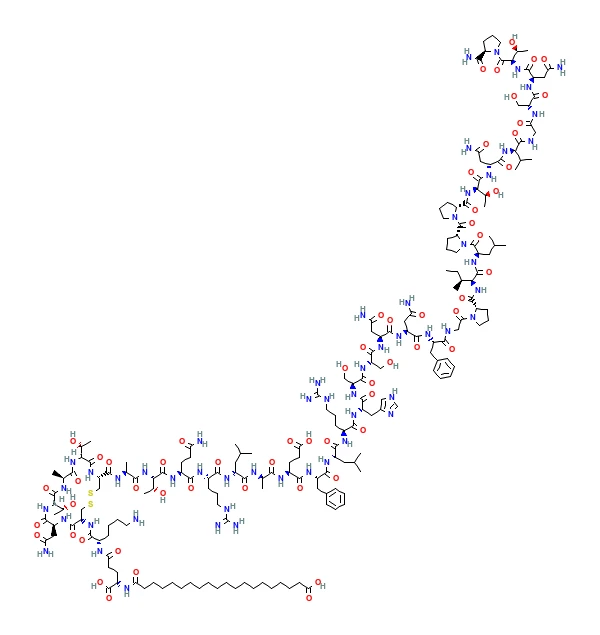
Cagrilintide is a long-acting copy of amylin, a hormone your pancreas releases together with insulin after you eat.
How does Cagrilintide work?
Amylin tells the brain you’ve had enough to eat and slows down how fast the stomach empties. It works through different receptors from GLP-1, which is why it is being combined with semaglutide.
What does the research show?
- In a phase 2 trial, 706 adults took different doses of cagrilintide alone. They lost 6.0% to 10.8% of their body weight on average, depending on the dose, compared with 3.0% on placebo.
- In the REDEFINE 1 trial of 3,417 adults, cagrilintide combined with semaglutide (CagriSema) led to 20.4% average weight loss over 68 weeks, compared with 3.0% on placebo.
- In a head-to-head trial reported in February 2026, CagriSema led to about 23% weight loss, compared with about 25% on tirzepatide (Zepbound).
How do the weight-loss results compare?
Each medicine compared with its trial’s placebo group. Ordered by reported average; this is not a head-to-head ranking.
- Medicine
- Placebo
Retatrutide · Experimental
12 mg weekly
Phase 2 · 48 weeks · 338 people
Tirzepatide · Approved
15 mg weekly (Zepbound)
SURMOUNT-1 · 72 weeks · 2,539 people
CagriSema · Experimental
Cagrilintide 2.4 mg + semaglutide 2.4 mg weekly
REDEFINE 1 (phase 3) · 68 weeks · 3,417 people
Semaglutide · Approved
2.4 mg weekly injection (Wegovy)
STEP 1 · 68 weeks · 1,961 people
Semaglutide · Approved (US)
25 mg daily pill (Wegovy pill)
OASIS 4 · 64 weeks · 307 people
Cagrilintide · Experimental
2.4 mg weekly, studied alone
REDEFINE 1 (phase 3) · 68 weeks · 3,417 people
Average body weight lost
Each human trial had different people, doses and lengths, so compare with care. The bars describe approved or experimental medicines studied under medical supervision with diet and exercise advice, not laboratory research products. They use full journal reports; conference findings and different endpoints appear separately below.
Show these numbers as a table
| Medicine | Trial | People | Weeks | Medicine | Placebo | Source |
|---|---|---|---|---|---|---|
| Retatrutide, 12 mg weekly | Phase 2 | 338 | 48 | 24.2% | 2.1% | PubMed |
| Tirzepatide, 15 mg weekly (Zepbound) | SURMOUNT-1 | 2,539 | 72 | 20.9% | 3.1% | PubMed |
| CagriSema, Cagrilintide 2.4 mg + semaglutide 2.4 mg weekly | REDEFINE 1 (phase 3) | 3,417 | 68 | 20.4% | 3.0% | PubMed |
| Semaglutide, 2.4 mg weekly injection (Wegovy) | STEP 1 | 1,961 | 68 | 14.9% | 2.4% | PubMed |
| Semaglutide, 25 mg daily pill (Wegovy pill) | OASIS 4 | 307 | 64 | 13.6% | 2.2% | PubMed |
| Cagrilintide, 2.4 mg weekly, studied alone | REDEFINE 1 (phase 3) | 3,417 | 68 | 11.5% | 3.0% | PubMed |
CagriSema combines cagrilintide with semaglutide. Its row and the cagrilintide-alone row share the REDEFINE 1 trial and placebo group. Both use estimates that include participants regardless of whether they stayed on treatment. The 3,417 people shown is the total trial population: 2,108 received the combination, 302 cagrilintide alone, 302 semaglutide alone, and 705 placebo.
PTT-A, CBL-514 and Adipotide: evidence so far
These findings do not provide comparable average human body-weight-loss results. Animal body weight and human fat volume measure different things, so they are shown separately from the bars.
Animal research · conference abstract
PTT-A
- Average human body-weight loss
- Not established in the cited research
- What was measured
- Body weight in diet-induced obese rats over 21 days
- Reported finding
- Body weight was 19.2% lower versus vehicle at the higher studied exposure; tirzepatide was 12.1% lower versus vehicle in the same experiment.
A difference versus vehicle in rats is not average weight lost by people. It cannot establish superiority to retatrutide in humans.
Human fat-volume subgroup · conference report
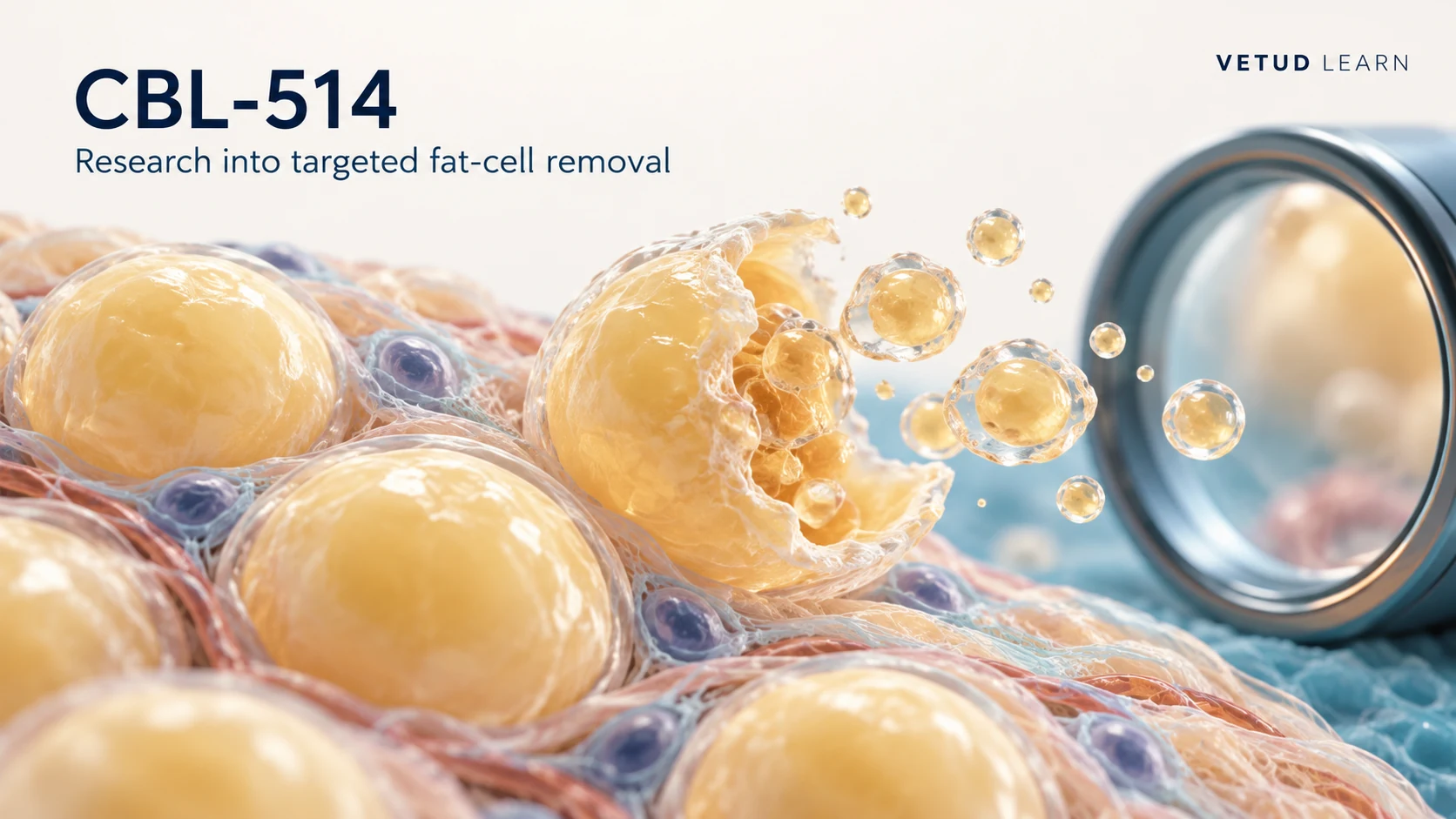
CBL-514
- Average human body-weight loss
- Not established by this fat-volume result
- What was measured
- MRI-measured visceral-fat volume, four weeks after final treatment
- Reported finding
- Visceral-fat volume fell 12.01%; placebo rose 5.68%. The small phase 2 subgroup had 40 participants with later follow-up data.
12.01% less visceral fat is not 12.01% less body weight. CBL-514 is an experimental small molecule, not a peptide.
Animal research · peer-reviewed study
Adipotide
- Average human body-weight loss
- Not established; no results posted for the registered phase 1 study
- What was measured
- Body weight, body fat and insulin resistance in obese monkeys
- Reported finding
- A 2011 study reported weight loss and improved insulin resistance in obese monkeys. This is an animal result, not a measured weight-loss benefit in people.
The animal study also found kidney tubular injury. The registered phase 1 study in men with prostate cancer and obesity enrolled four people and was terminated. It does not establish safety or weight-loss effectiveness in people.
Known risks and side effects
- Like GLP-1 medicines, it mainly causes stomach side effects such as nausea, constipation and diarrhea.
- It is not approved, and long-term safety is still being studied.
Is Cagrilintide approved?
Tested in people, but not approved as a medicine.
Not approved yet. Combined with semaglutide as CagriSema, it has been submitted to the FDA, with a decision expected in late 2026.
From the community
Watch: Cagrilintide and related science
Start with the compound discussion, then use the background lesson to understand its biology. Each card explains its connection. Recordings may predate later findings or regulatory changes.
Dr Kidd
CagriSema: semaglutide plus cagrilintide
An explanation of the combination and earlier study findings. Later head-to-head results are linked in our article.
Dr Kidd · medical education channel
Discusses the compound
Discusses semaglutide plus cagrilintide and earlier results. Our source links cover the later head-to-head trial.
Ohio State Wexner Medical Center
What is a GLP-1 agonist, and how does it work?
A hospital explainer of GLP-1 signalling, appetite and blood-sugar regulation.
Allison L. Rhodes, MD · obesity medicine
Related biology
Background on GLP-1 signalling for understanding Cagrilintide. It does not demonstrate benefits of this compound or formulation.
Ohio State Wexner Medical Center
Avoiding weight regain after GLP-1 medication
Clinical context for weight maintenance after GLP-1 treatment. It does not test CBL-514 or other experimental add-ons.
University hospital patient education
Related biology
Background on weight maintenance after GLP-1 treatment for understanding Cagrilintide. It does not demonstrate benefits of this compound or formulation.
Sources and references
- Once-weekly cagrilintide for weight management in people with overweight and obesity: a phase 2 trialLau et al. · The Lancet · 2021
- Coadministered Cagrilintide and Semaglutide in Adults with Overweight or Obesity (REDEFINE 1)Garvey et al. · New England Journal of Medicine · 2025
- REDEFINE 4: CagriSema and tirzepatide head-to-head resultsNovo Nordisk · original sponsor announcement · February 23, 2026
VETUD Learn explains published research in plain language. It is general information, not medical advice. Talk to a doctor before starting, stopping or changing any treatment.